Life & Literature Future Framing for BHL
View more presentations from Chris Freeland
14-15 November, 2011, Field Museum, Chicago, Illinois, USA. http://www.lifeandliterature.org.
14-15 November, 2011, Field Museum, Chicago, Illinois, USA. http://www.lifeandliterature.org.
I should not be here, writing this. In 1998, at 23 years old, I was hit by a car at this intersection in New Orleans and but for the grace of God I did not die. I jumped. At the last second. And I don't know why. In the middle of the day my partner (just "boyfriend" at the time, having dated less than 6 months; it's now been more than 13 years) and I were crossing the street. We had been on vacation at his family's place in Pensacola Beach, Florida, and then finished up the week with a crazy weekend in New Orleans. I've had crazy weekends in Nola before-one in 1996 that gave me freedom in ways that aren't appropriate for mention here, one in 1997 that confirmed the relationship I was in at the time was doomed, and then this trip.
We were coming back from a day trip to the Garden District. We were walking up Peters Street to find a place for lunch, and decided to cross the street at Decatur/St. Louis to go to the Hard Rock Cafe. As we crossed the street, a drunk driver hit me. I saw it all happen in slow motion. She was driving a green Beretta (ironic, given that was what my ex from 1997 drove) and as I crossed the street, with my partner a few paces ahead, she took a left turn and hit me full on. At the very last second, I jumped. She was drunk, and she didn't stop. She drove on for more than 10 feet. If I hadn't jumped, she would have run me over and I would not be alive today. That fact was almost instantly imprinted on my mind. If I hadn't jumped, I would be dead.
But I jumped. And so I ended up on the hood of her car instead of under her tires. What I will never forget, as long as I am lucky to live, is the expression on her face when she hit me. She was not remorseful, she was not surprised-she laughed. She and her drunk friend in the passenger seat laughed as I landed on the hood of her car. How do I know she was drunk? Because it was obvious, to me. Because I saw her runny eyes through the windshield. In the instant that took an eternity, as I fell onto her car, I made eye contact and saw that there was no comprehension behind her gaze.
And since this was the middle of the day, there were dozens of people watching this all play out, including my partner, whose reaction I can only imagine with horror. I rolled off the hood of her car and limped over to the curb. By the time I made it to the sidewalk she had driven off, she sped away, she left the scene. Bystanders got her license plate, and made sure that I was ok, which unbelievably I was. We walked up a block to the Hard Rock Cafe, the first available open business (this was all before cell phones), and called the cops. The rest of the day is an adrenaline blur. At some point I remember my partner and I in our hotel room, laying on our rented bed, crying. Not out of sorrow, but out of joy. I was alive. I had a nasty bruise on my right shin, AND THAT WAS ALL! I was alive.
And so every trip back to New Orleans is a crazy mix of anticipation (because fun is just around the corner) and excitement (because fun is just around the corner) and anxiety (because sometimes that corner is dangerous). I was given a gift of unusual perspective on life at 23, and as unbelievable as it sounds, I'm glad it happened. I said this happened by the grace of God and that's truly what I believe. I did not die that day. I was spared for some reason that is unknown to me, and every moment since has been a gift. I know it sounds trite, I know it sounds simple, but it's what I believe. I try to make the most of every day because I nearly didn't have another one. I hope you can do the same.
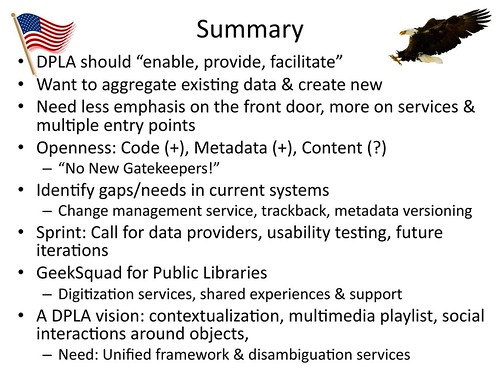
Summary:
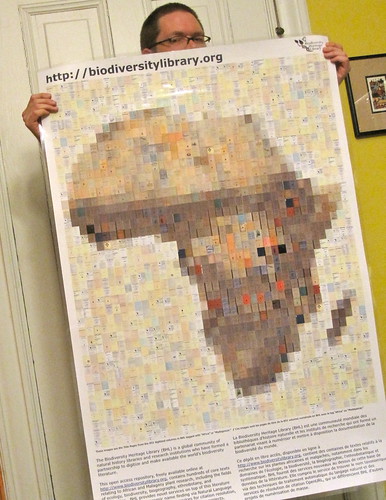
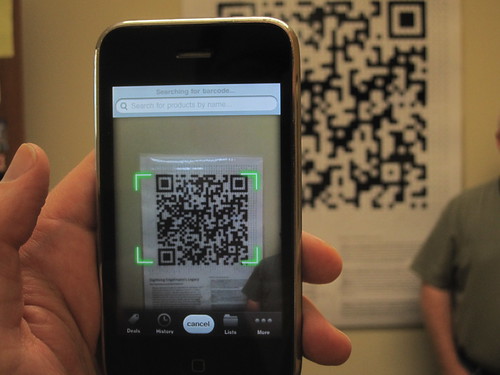 QR Poster for Engelmann Project, originally uploaded by chrisfreeland2002.
NOTE: This is a somewhat long, rambling post. I'm writing this to help others who are facing surgery to correct Morton's Neuroma and to describe my recovery process and progress.

I'm now three weeks post-op for surgery to remove a damaged nerve in my foot. I was diagnosed with a condition called "Morton's Neuroma" that wreaked havoc on my mobility for the better part of 2010. The story goes like this...
I'm 35, 6'2", weigh 190lbs, and wear a size 13 (US) shoe. So, yeah, big feet. I've always had a hard time finding shoes that fit well, and usually made the stupid choice of style over comfort. That was never much of a problem...until this year. I work in the fields of science & technology and have had a fairly sedentary desk/office job for more than 10 years, plus I live in St. Louis, where everyone drives everywhere. Two years ago I started frequent domestic & international travel for work. One of the aspects of travel I enjoy most is being on foot much more than at home. Towards the end of 2009 I started noticing some uncomfortable tightness & pain in my right toes, foot & ankle, but just brushed it off as aches & pains associated with getting older & not being in prime physical condition.
This continued through the spring of 2010, with the pain getting worse & becoming more persistent. No longer was it just the occasional "ouch" when walking on an uneven surface - I would wake up feeling like my foot was on fire, and have sharp, shooting pain through my toes & up to my ankle every time I put my foot down. Without realizing it, I started walking on the outer edge of my foot to avoid the pain, which then started causing my ankle to hurt more & swell. Not exactly a good situation.
I finally went to my physician in late spring & was first referred to a podiatrist. He poked & pressed around on my foot & ankle in ways that made me squirm, and not in a good way, so he ordered up some xrays. The first round showed what looked like fractures in a couple of metatarsals (the bones that run from the base of your toes to your midfoot) so he sent me for an MRI. It showed that I had torn tendons on my ankle and stress fractures that had rehealed in my 2nd & 3rd phalanges & metatarsals (toes & foot). He then referred me to an orthopedic surgeon, and that's when things started getting medieval.
The orthopedist reviewed my MRI & did her own xrays, plus talked with me about all the pain I was having. Her diagnosis was that I had a neuroma, or nerve tumor, between my 2nd & 3rd toes caused by the improper healing of the broken metatarsals, as well as poor bone morphology.
Long story short (by this time it was September): the 2nd & 3rd toes on my right foot are more closely aligned than normal. I did something (don't know what, exactly) that caused those bones to fracture. They healed on their own, but not perfectly, and so those crazy cracked bones were grinding on the nerve that runs between them. That damaged nerve was causing the shooting pains, which in turn was causing me to walk in such a way as to avoid the pain, which was tearing tendons in my ankle.
Fun, huh?!
So then, to treatment. Apparently you can't do an xray or MRI & see if you have a damaged nerve, so you literally have to take a shot in the dark - a cortisone shot directly into the nerve. Now listen, I have a very high pain threshold (piercings, tattoos) but that mother HURT! But it worked. My foot was numb, like your mouth feels after getting a shot at the dentist, and for the first time in months it didn't hurt or ache or burn. Success.
I was also sent for physical therapy, which didn't do a damn thing. I got special inserts for my shoes, which helped alleviate a little bit of the pain, but not enough to make a difference in my daily activities. Frustrating & expensive.
On my followup visit with the orthopedist we talked about next steps and because the cortisone shot was so effective, she considered me a good candidate for surgery. As in, surgery to remove the damaged nerve. As in, cut open your foot, hack out the nerve, sew it back up, send you home. This freaked me out a little bit. I wasn't worried about the surgery itself, I was worried about the recovery & long term side effects. My doc talked me through this - because the nerve is removed, I'd be left with a numb spot on the top & bottom of my foot along the incision, plus the inner sides of my 2nd & 3rd toes would be numb. The numbness would not affect balance, and following recovery I'd be able to walk normally & return to activities that I'd given up because of the pain, namely going to the gym & doing yoga.
But, wow, it's irreversible, optional surgery. I mean, it's optional in that I wouldn't die if I didn't have surgery. And you know, once you cut out a nerve it's gone - it can regenerate a little bit, but it's not like it's going to magically grow back & be 100%. So I was facing a difficult decision: have the surgery & be left with a numb spot on my foot, or don't have the surgery & be left with a painful spot on my foot. Plus, I read a few web sites & forums from people who had had the surgery; some with good results, some with bad results. This post in particular & its comments scared the bejesus out of me...so much so that I got a second opinion & had a very lengthy followup with my doc to make sure I was making the right decision.
And so after a lot of consideration, I opted for surgery. And I don't regret it one bit.
The surgery itself was a snap - outpatient, in & out in 7 hours. My partner was traveling for work & couldn't change his schedule, so my best friend Tagert took me to the facility. I was admitted, did the paperwork, assigned a bay & bed, got an IV, met with my surgeon, laughed over the mark she put on my foot, waved to the camera, and then Dr. Feelgood came in to give me meds and it's all a blur after that. I sort of remember being wheeled out of the bay into the OR, and kind of remember cracking some joke as they moved me to the operating table, but seriously, I woke up in recovery & thought I'd just dozed off. I was surprised to see that my foot was all bandaged up & the surgery was over. I had no adverse reactions to the anesthesia, so I had a couple of crackers, a little bit of juice, and was sent home.
And then I spent the next 10 days like this:
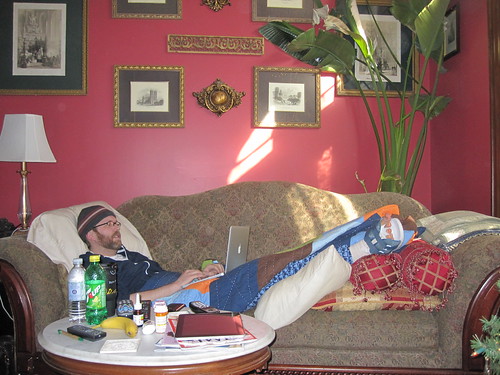
Yes, really. Tagert stayed with me that night while my partner was out of town, and two neighbors came over to help get me food & get me situated. I was on heavy narcotics (Norco; LOVELY stuff) every 4 hours, along with a few other meds for inflammation & to prevent blood clots. For the first 3 days my foot was completely numb from the anesthetic block. It felt like concrete - just numb & heavy & useless. I kept my foot elevated - "toes above your nose" - with the help of pillows, and got off the couch as little as possible. When I did get up it was for short periods of time only and I had to use crutches to get around. I have to say, and I know it may sound bad, but honestly it was a really restful experience - wake up, take a pill, watch TV, fall asleep, repeat. My two dogs were with me, one of whom got to spend all her time on the couch next to me. Time had no meaning or importance. As the Italians say, "Dolce far niente" - it is sweet to do nothing.
On my 3rd day after surgery (a Thursday) I returned to work via couch & laptop & wifi. On that Friday I thought I'd be brave and start cutting back on the pain pills. Big mistake. Huge. The pain started edging in & then all of a sudden it was so intense & so present that it made me sick to my stomach. I got right back on the Norco horse & rode it through the weekend. On my 10th day after surgery I went in for a checkup & had my bandages removed & stitches out. That hurt like hell.
As of this writing I'm on my 4th week of recovery. Between that first week & now I've gotten off the pain meds, but am still taking aspirin to reduce the risk of blood clots. I am driving (something I couldn't do while stitches were in) and I've ditched the crutches. I use a cane when I'm outside the house because I still have limited flexibility in my toes & the cane helps me move around with stability. I've returned to work, and all things considered, once again am a productive member of society.
And so what everyone wants to know is: is your foot numb? The answer is yes. I have about a 2" numb spot on my foot that follows the incision, and those inner sides of my 2nd & 3rd toes are numb. I still have normal nerve supply to the other side of each toe, and the doc said that there were small fibrous nerves in the top of each toe remaining, so overall I've only lost a very small portion of feeling in my foot. I'm gaining flexibility and am able to be on my feet for longer periods of time every day.
The other thing people want to know is: would I do it again? The answer is yes, absolutely, because I'm free from pain. For the first time this year I'm able to wake up without feeling like my foot is on fire. I can walk without feeling like I'm stepping on nails every time I put my foot down. I feel like I have my life back, and that is wonderful.
If you have been diagnosed with a neuroma & are considering surgery, please read any & all of the above as the experience of one person. Overall my experience has been good, but I have heard from others who have had less successful procedures. I think for me it was finding the right surgeon & working with her to make sure this was the right procedure for me. I have had the luxury of a healthy stockpile of sick time & vacation days (as well as doing this during the holiday season) which has allowed me to be at work when I'm able to be productive & at home when I'm not. I also think I came into the surgery with realistic expectations of what I'd be able to do during recovery & afterwards, and so while my dreams of being a professional dancer may be over, I'm able to do my actual professional work without pain & suffering.
Last thing: I could not have made it through this recovery time without proper support, both physical & emotional. For physical support of my foot I got a pair of orthopedic Crocs. Now look, I'm not a fan of Crocs. I think they're ugly and I've never understood why people wear them...until I put these on. They are light, they are comfortable, they are quite possibly the smartest purchase I've made in years. This particular line has an extra wide toe box that makes for easy on & off without pain or fuss. If you're going through any kind of foot surgery I highly recommend these. As for emotional support, I've always been an independent person but there's no way I could have gotten through this without the help of my family & friends. You *have* to have someone around in your first week to be your feet & hands - to go get things for you, to run errands, to bring in the mail, that kind of boring, normal stuff - because I'm convinced that my successful recovery is due to taking it completely easy for as long as possible. So to everyone who has helped me, I give a huge THANK YOU!
I wrote this for the sake of sharing information about my experience with Morton's Neuroma surgery & recovery. If you're facing something similar, I hope you find this helpful, and I'll be glad to talk with you or answer any questions you might have.
In recent years the landscape has dramatically changed regarding the availability of digital taxonomic literature, both contemporary publications as well as legacy texts. Projects like the Biodiversity Heritage Library and Plazi, among others, have digitized and made available a wealth of scientific texts that support the online review of protologues and species descriptions. While this advent has been exceptionally useful for scholars and has undoubtedly expedited the taxonomic process, making this literature available in digital form opens the possibility for new secondary analyses that are impossible to accomplish with traditional printed texts.Abstract submission is open through 31 October 2010 at:
Scholars working in natural language processing, semantic markup, and other efforts within biodiversity informatics are developing new tools for the use of these digitized materials beyond the traditional human-paper interaction. These new human-machine and machine-machine interactions are facilitated by emerging software tools that enhance the traditional scientific publication, turning these texts into rich, interactive datasets that can be incorporated into other analyses.
This seminar will explore the motivation behind the digitization of historic taxonomic literature as well as the contemporary publication of new treatments and texts, and how those texts can be enhanced by these new informatics tools. Panelists will review the progress made through both legacy digitization as well as contemporary publication, and special focus will be given to scholars who are currently building the informatics tools that help provide fine-grained, semantic description of traditional taxonomic texts. Using these novel algorithms and applications, presenters will detail how taxonomic publications can be enhanced through semantic description and how these enriched texts can expedite the taxonomic process and facilitate the open sharing of organismal data to a global audience of scholars and students.
Due to the volcano in Iceland, I may or may not be going to Madagascar for the AETFAT conference on Thursday as planned. I'm routed through London, everything else is full, so I think I'll have to be making a go/no-go decision on Thursday morning. One of my main reasons for going to the conference was to present this poster (and another one for Tropicos) and I hope I get to display it because I think it turned out really well! Using a variety of open software and open data, I made a photomosaic of Africa and Madagascar from the title pages of books tagged with "Africa" or "Madagascar" in the Biodiversity Heritage Library. Here's how I did it:
1. Downloaded the BHL schema from http://www.biodiversitylibrary.org/data/BHLExportSchema.pdf and the following data exports:
• Title: http://www.biodiversitylibrary.org/data/title.txt (10MB+)
• Subject: http://www.biodiversitylibrary.org/data/subject.txt (3MB+)
• Item: http://www.biodiversitylibrary.org/data/item.txt (14MB+)
2. Imported those text files into tables in a simple db app (MySQL or Access). I set up a One-to-Many relationship between the Title.TitleID field and Subject.TitleID and Item.TitleID, describing how a title ("Flore de Madagascar") has shared data in subjects ("Madagascar") and items ("Volume 25"). Note the field Item.ThumbnailPageID, which indicates the pageID of the image described as either the Title Page, or if no Title Page is selected, then a representative page of interest from the book.
3. Using a simple query editor I created a SQL statement to select the ThumbnailPageID from digitized items whose titles are tagged with the subjects "%Africa%" or "%Madagascar%." Using these wild cards included subjects like "South Africa" and "Madagascar, Central."
4. Using BHL's API documentation for images, I added "http://biodiversitylibrary.org/pagethumb/" to each of the pageIDs in 3. above. This field now contains the link to the page image for the 851 title pages.
5. I used a download manager (Speed Download for Mac OSX; there are plenty for Win/Unix) to grab those 851 JPGs. Using the default size returned, each tile was small at 200 pixels wide, averaging 8k each.
6. I used the map of Africa and Madagascar from UiO as a reference image because it didn't have the sea terrain present, which muddled my first few attempts. I blew that image up using *proprietary software alert* Adobe Photoshop. You can use other imaging software to do the same, but I like Photoshop. I made a blank image roughly 3'x4' at 300 dpi and pasted in the source image, then scaled it to the size of the poster.
7. I then used MacOSaiX to build the photomosaic. This is where all the magic happens, and where I did the least. I just told the app to use the reference image from 6 & the thumbnails from 5 to build the mosaic, and off it went. After 40 minutes or so it beeped and said it was done. Voila! A photomosaic of Africa and Madagascar made from title pages of open access science books.
8. To make the poster I pasted the JPG into *proprietary software alert* Microsoft PowerPoint, because it's surprisingly easy to use for poster layout. Dropped in some text, logo, & a URL and there you have it - a cool poster using open data and (mostly) open software.
You can download the finished poster here as a 1MB JPG.
I'm purposefully documenting how I did this to encourage others to incorporate BHL data into their visualizations & presentations. BHL is an incredibly rich dataset with open access policies and open APIs, and this is but one simple example of how I was able to filter data and extract out compelling images from the millions we have scanned.


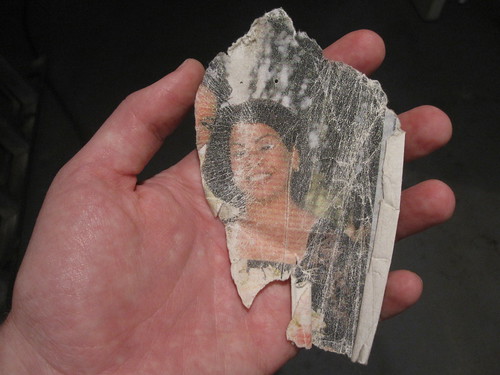


We left the platform and walked more than a block before crossing the street to return to our hotel, passing more memorial signs, and were stopped by a traffic light. I pushed the "Walk" button on the post and stopped to look at the sign taped above it. Staring back was a smiling woman and her sister, or maybe close friend. They very clearly had a bond because of the way they were standing together. The sign was weathered and torn, as if it had been posted for a long time. Many of the other homemade signs and color printouts we had seen on display were newer and labeled "In Memoriam" but this was clearly older and posted with "MISSING" in big, black letters along the top. I knew that woman's family, maybe the other woman in the picture, had made this in hopes of finding their wife/sister/mother/daughter in the days after 9/11. Because the sign was weathered it was starting to tear away from the tape on the post, and I could see the ripped edges fluttering in the winter breeze. When we were standing in line we had overheard two women talking about how every few weeks some municipal authority (Streets or Port Authority, maybe even Refuse) gathered the signs and trinkets left at the site; some were kept for archival purposes but the vast majority were taken off-site and burned.
Without thinking, I reached out and tore off the piece of the sign that was freed from the tape, about to blow away on its own in the wind. A woman standing behind me gasped, as if by tearing the sign I was somehow interfering with the woman's rescue, or desecrating her memory. I stuffed the piece of paper in my pocket in spite of the disapproving looks from the woman behind me, and from my partner as well.
For months, years, afterwards I couldn't explain why I felt the need to take that piece of paper that night. What I knew from the start was that I didn't take it as a memento or a souvenir. What became clear to me over time was that freed section had the image of her face, smiling and full of joy, and I couldn't bear the thought of her picture becoming lost along the gutter and swept up like trash. I could only imagine that she herself, her being and her soul, had suffered far worse on 9/11, and I knew she deserved more respect than to be cast aside in body and image. I keep that piece of paper in a special place, and I think about her every 9/11, her family, and the other Americans who lost their lives that day.